Stocks vs Mutual Funds in Pakistan: Which Should You Consider?
A clear comparison of buying individual PSX stocks versus investing through mutual funds in Pakistan, covering risk, effort, diversification and costs.
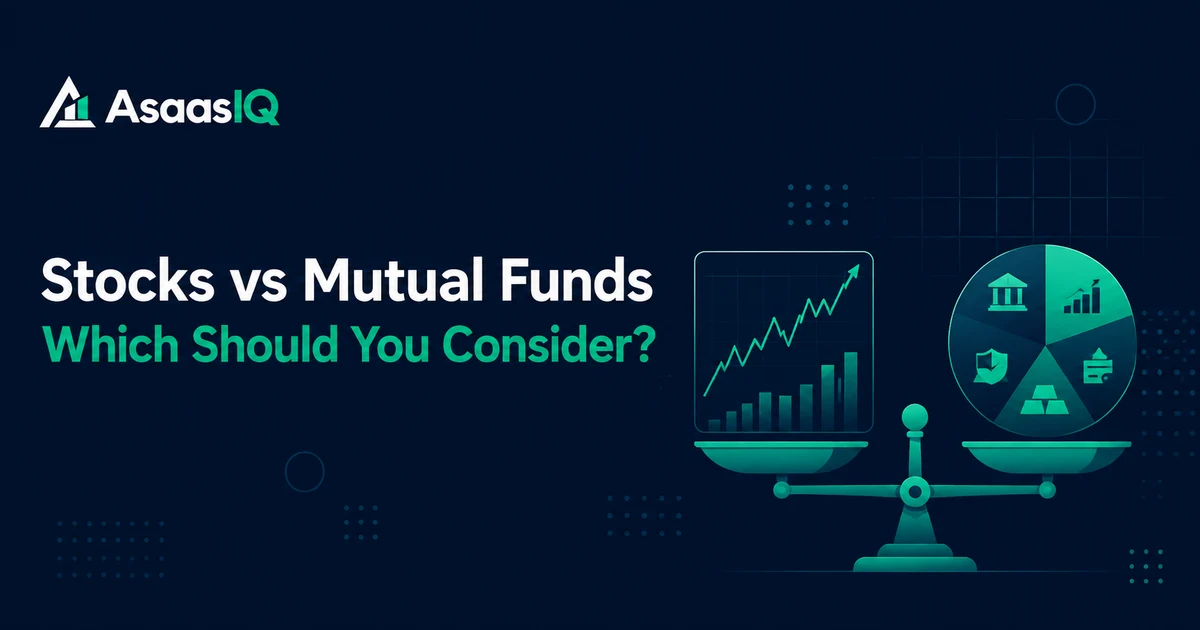
Somewhere between "I want to start investing" and "I've actually invested," almost everyone hits the same fork in the road: do I pick individual companies myself, or do I hand that decision to a fund manager? It sounds like a small logistical question, but it actually says a lot about how you want to spend your time, how much risk you're comfortable holding in one place, and how confident you are in your own research.
Neither path is objectively better. They serve different kinds of investors, and plenty of people eventually use both. Let's walk through what each one actually involves.
Buying individual stocks: full control, full responsibility
When you buy shares in a specific PSX-listed company — say, a bank, a cement manufacturer, or a fertilizer producer — you're taking a direct, concentrated position. Your returns are tied entirely to that company's fortunes: its earnings, its management decisions, its sector's health, and yes, occasionally things completely outside its control like currency swings or regulatory changes.
What this gets you:
Direct ownership means direct control. You choose exactly which businesses you're backing, based on whatever research or conviction you bring to the decision. There's no management fee eating into your returns, because there's no manager — just you.
For investors who genuinely enjoy reading annual reports, following quarterly earnings, and understanding how a business actually makes money, this can be the more engaging and potentially rewarding path. Some of the best long-term investors built their track record by deeply understanding a handful of businesses rather than spreading themselves thin.
What this costs you:
Time, mostly. Understanding a company well enough to feel confident holding its stock takes real effort — reading financial statements, following industry trends, staying current on company news. This isn't a one-time task; markets and businesses keep moving.
There's also concentration risk to reckon with. If you hold shares in just three or four companies and one of them stumbles badly — a scandal, a bad quarter, a sector-wide downturn — your portfolio can take an outsized hit. Building genuine diversification through individual stock picking usually means holding a dozen or more positions across different sectors, which multiplies the research burden.
Mutual funds: outsourcing the picking
A mutual fund pools money from many investors and hands the investment decisions to a professional fund manager working at a licensed Asset Management Company, or AMC. The SECP regulates this industry, and MUFAP — the Mutual Funds Association of Pakistan — publishes information across registered funds so you can compare them.
What this gets you:
Instant diversification is the headline benefit. A single equity fund might hold thirty, forty, or more individual stocks across multiple sectors. Buying one fund unit gives you exposure to all of them at once — something that would take considerable capital and effort to replicate on your own.
You're also outsourcing the ongoing monitoring work. The fund manager watches the holdings, rebalances when needed, and reacts to company or market developments so you don't have to track every position yourself. For people without the time or inclination to research individual companies, this can be the more realistic path to actually getting invested rather than staying on the sidelines indefinitely.
What this costs you:
Nothing is free. Funds charge a management fee (often expressed as an expense ratio), and some charge additional sales loads on entry or exit. These costs compound over time just like returns do, so a seemingly small annual fee can meaningfully dent long-term outcomes.
You also give up individual stock selection. If you have strong convictions about a specific company, a diversified fund won't let you express that — you're buying the manager's overall strategy, not your own picks.
Putting them side by side
| Factor | Individual Stocks | Mutual Funds |
|---|---|---|
| Diversification | You build it yourself, trade by trade | Typically built into the fund already |
| Time required | Significant, ongoing | Lower — the manager does the legwork |
| Costs | Brokerage commission per trade | Management fee (expense ratio), possibly a sales load |
| Control | Complete — you choose every holding | Limited to choosing which fund(s) to buy |
| Best suited for | Investors willing to research individual companies | Investors who want market exposure without deep company-level research |
You don't actually have to choose just one
This is worth saying explicitly, because the framing of "stocks vs. funds" can make it sound like a permanent, exclusive decision. It isn't. A common approach — and a reasonable one — is holding a core of diversified mutual funds for broad market exposure, while allocating a smaller slice to individual stocks you've researched and feel genuinely confident about. The fund core handles diversification; the stock picks let you act on specific convictions without betting the whole portfolio on them.
The right split depends on things only you can answer: how much time you're realistically willing to commit to research, how comfortable you are watching a concentrated position swing in value, and what you're actually trying to achieve with the money.
Not all funds are the same fund
It's easy to talk about "mutual funds" as if they're one product, but the category covers a lot of ground — equity funds, income funds, money market funds, and Shariah-compliant versions of each, all with meaningfully different risk and return characteristics. An equity fund behaves nothing like a money market fund. Fee structures differ from AMC to AMC and fund to fund, and they change over time as funds adjust their offerings.
None of that can be summarized responsibly in a general comparison article. Before investing in any specific fund, pull up its current offering document and fact sheet — available from the managing AMC directly or through MUFAP — and read what it actually says about fees, holdings, and strategy, rather than assuming based on the fund's name or category alone.
The honest limitation here
This article intentionally stays away from naming specific stocks or funds, stating current fee percentages, or citing historical returns — all of that changes, and stale numbers do more harm than good in an article meant to last. Treat this as a framework for thinking about the decision, not a final answer. If you're unsure which path — or what mix of both — fits your situation, a licensed financial advisor can help you think it through with your specific goals and risk tolerance in view.
Sources & References
Educational information only
AsaasIQ provides general educational content about investing in Pakistan. Nothing on this site is personalized financial, tax, legal or investment advice. AsaasIQ is not a financial advisor, broker, asset management company or affiliate of the Pakistan Stock Exchange. Always verify current facts, rates and regulations with official sources before acting.

Founder and Editor, AsaasIQ
Software engineer and the founder of AsaasIQ. Not a licensed financial adviser -- every article is educational and source-linked.
Published August 2026 · Last reviewed August 2026