Islamic Mutual Funds vs Conventional Funds in Pakistan
How Islamic mutual funds in Pakistan differ from conventional funds in screening, structure and typical costs, and what to weigh when choosing between them.
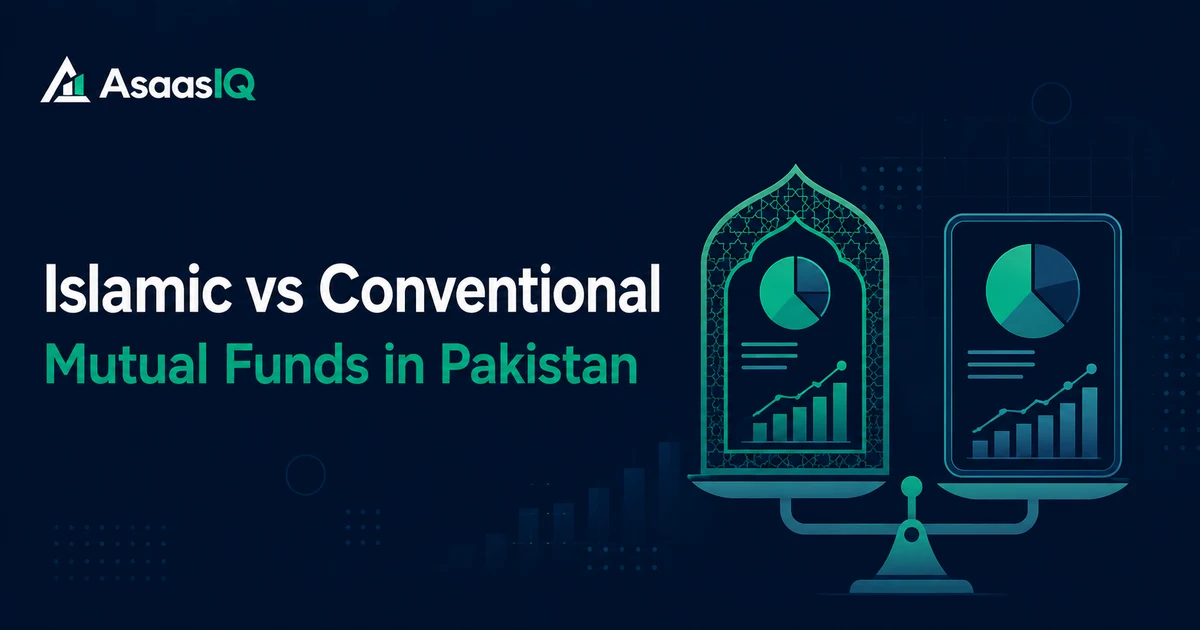
Once you've decided you want mutual fund exposure rather than picking individual stocks, a second decision often follows close behind for many Pakistani investors: Islamic or conventional? It's tempting to assume the answer is purely about religious preference and nothing else, but there are real structural and practical differences worth understanding regardless of why you're choosing one over the other.
What actually separates the two categories
A conventional mutual fund's universe of potential investments is essentially unrestricted by religious criteria — the fund manager can invest in any company or instrument that fits the fund's stated strategy, including conventional banks, interest-bearing bonds, and companies across any sector.
An Islamic mutual fund operates within a narrower, screened universe. As covered in more detail in our article on what makes an investment Shariah-compliant, this typically means excluding certain sectors entirely (conventional banking, alcohol, gambling, and similar categories) and applying financial ratio screens to companies that remain eligible, alongside a purification process for any incidental non-compliant income.
That narrower universe has real, practical consequences worth naming honestly rather than glossing over.
The trade-offs that come with screening
A smaller investable universe. By definition, excluding certain sectors and companies shrinks the pool a fund manager can choose from. Depending on market conditions, this can mean an Islamic fund's sector composition looks noticeably different from a conventional fund's — often underweight in conventional financials, for instance, since most conventional banks don't pass the screen.
Different risk and return characteristics. Because the underlying holdings differ, an Islamic fund and a conventional fund pursuing broadly similar strategies won't necessarily perform the same way over any given period. Sometimes the screened universe outperforms; sometimes it underperforms. There's no permanent, structural reason to expect one to consistently beat the other — the difference in holdings simply means the return pattern won't be identical.
Sukuk instead of conventional bonds. For income-oriented Islamic funds, sukuk generally replace conventional interest-bearing bonds as the fixed-income component. Structurally, sukuk represent an ownership or participation interest in an underlying asset or venture, with returns tied to that asset's performance rather than a fixed interest payment — a meaningfully different mechanism even when the practical cash flow can look superficially similar to bond interest.
On costs and fees
It's a common assumption that Islamic funds cost more to run because of the additional screening and Shariah advisory board involvement, but this isn't a fixed rule — fee structures vary by AMC and by specific fund, Islamic or conventional. Rather than asserting a general pattern that might not hold for any specific pair of funds, the responsible approach is comparing actual expense ratios and any sales loads between the specific funds you're considering, using their current fact sheets.
What actually determines fund performance, either way
Whether Islamic or conventional, a fund's performance depends on the same fundamental drivers: the skill of the fund manager, the quality of the underlying holdings, market conditions during the holding period, and the fee drag over time. Being Shariah-compliant doesn't make a fund inherently safer or inherently riskier in a general sense — it changes which specific companies and instruments the fund can hold, which then influences its risk and return profile in whatever direction that particular screened universe happens to move.
This means comparing an Islamic fund to a conventional fund purely on "which type is better" doesn't really hold up as a useful question. A more useful comparison looks at specific funds within each category — their actual holdings, their track record, their fees, and how their strategy fits your goals — rather than treating "Islamic" or "conventional" as a single verdict on quality.
Practical questions worth asking before choosing
If Shariah compliance is a hard requirement for you, the Islamic-versus-conventional question isn't really optional — you're choosing among Islamic funds, full stop, and the more useful comparison is between the Islamic funds available to you. If compliance is more of a preference alongside other priorities, it's worth being honest with yourself about how you're weighing that preference against other factors like historical performance, fees, and fund manager track record.
Either way, the practical due diligence looks the same regardless of category:
- Read the fund's current offering document and fact sheet, available through the managing AMC or MUFAP
- Check the fund's actual sector allocation and top holdings, not just its category label
- Compare expense ratios and any sales loads against similar funds
- For Islamic funds specifically, confirm the Shariah advisory board and look for published compliance reports
The honest limitation here
This article compares the two fund categories structurally and doesn't recommend any specific fund in either category, and it doesn't state current performance figures or fee levels for any real fund, since those change and require verification at the time you're actually deciding. For guidance on the religious permissibility question specifically, that determination belongs with qualified Islamic scholars, not a financial education website — and for guidance on which specific fund fits your financial goals, a licensed financial advisor can help you weigh the practical trade-offs against your own circumstances.
Sources & References
Educational information only
AsaasIQ provides general educational content about investing in Pakistan. Nothing on this site is personalized financial, tax, legal or investment advice. AsaasIQ is not a financial advisor, broker, asset management company or affiliate of the Pakistan Stock Exchange. Always verify current facts, rates and regulations with official sources before acting.

Founder and Editor, AsaasIQ
Software engineer and the founder of AsaasIQ. Not a licensed financial adviser -- every article is educational and source-linked.
Published August 2026 · Last reviewed August 2026