What Is the Pakistan Stock Exchange? A Beginner's Guide
A plain-language introduction to the Pakistan Stock Exchange (PSX): what it is, how it works, who regulates it, and how beginners can start learning about it.
Ask ten people in Pakistan what the stock exchange actually does, and you'll probably get ten different half-answers. Some will say it's where rich people gamble. Others will mention a number that goes up and down on the news. A few will confuse it with cryptocurrency. None of these are quite right, and that gap in understanding is exactly why we're starting here.
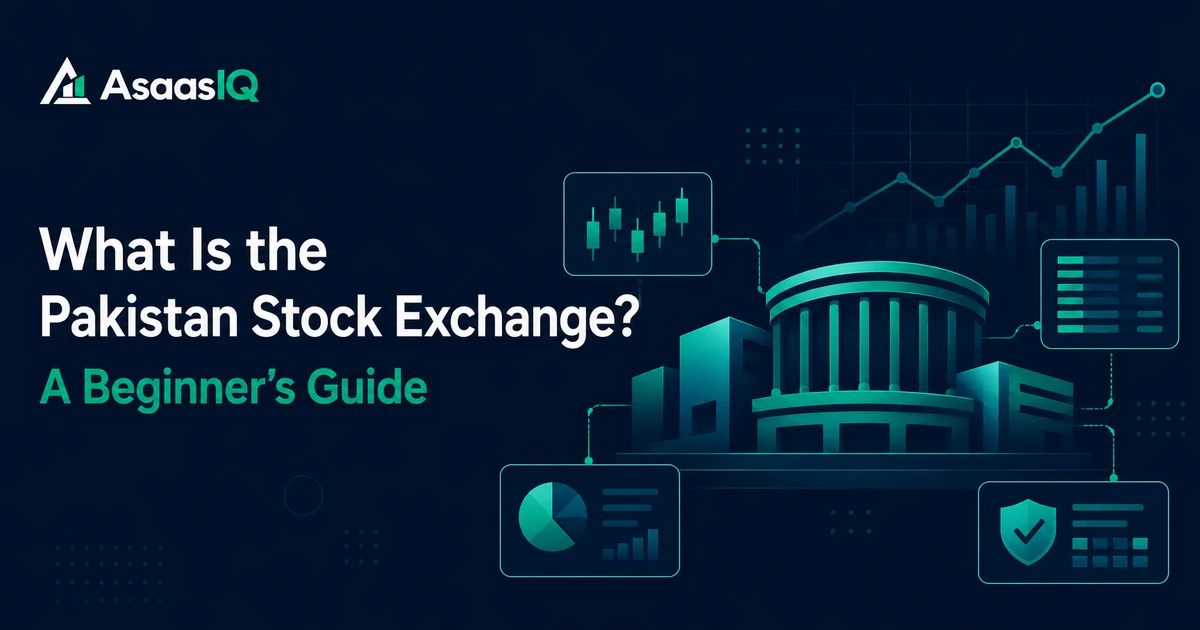
The Pakistan Stock Exchange, or PSX, is simply a marketplace. Not a casino, not a prediction game — a marketplace where people buy and sell small pieces of ownership in real companies. If you've ever wondered how a company like Engro or Lucky Cement actually lets outside people become part-owners, the PSX is the mechanism that makes it possible.
So what is the PSX, exactly?
Strip away the jargon and a stock exchange is a regulated venue that matches buyers with sellers. When a company wants to raise money to expand a factory, launch a new product line, or pay off debt, one option is to sell shares — small ownership units — to the public. Once those shares exist, people need somewhere to trade them afterward. That's the exchange's job.
The PSX itself has an interesting history. It wasn't always one exchange. Until 2016, Pakistan actually had three separate regional exchanges — Karachi, Lahore, and Islamabad — each operating somewhat independently. They merged into the single national exchange we know today, headquartered in Karachi. If you ever come across an old reference to the "KSE-100," that's a holdover from the Karachi Stock Exchange days; the index survived the merger even though the standalone Karachi exchange didn't.
When you buy a share of a listed company, you're not just buying a number on a screen. You own a fractional claim on that company's assets, profits, and future decisions (in a very small, diluted way — don't expect voting power with ten shares). If the company does well, your shares can become more valuable, and some companies distribute a portion of profits back to shareholders as dividends. If the company does poorly, the opposite happens. That two-sided reality is worth sitting with before you invest a single rupee.
How does a trade actually happen?
Here's the part that trips people up: you can't just walk into the PSX building and buy shares. You need an intermediary — a licensed brokerage — to place orders on your behalf through the exchange's electronic trading system.
The mechanics, simplified, look like this. You open an account with a broker. You fund that account. You place an order — say, "buy 100 shares of Company X at market price." The broker routes that order into the PSX's matching engine, which pairs it against a corresponding sell order. Once matched, the trade executes, and the paperwork (all electronic now) flows through to settlement.
Settlement itself is handled by the Central Depository Company, or CDC. This is worth understanding because it explains why you don't get a paper share certificate anymore. The CDC maintains electronic records of who owns what, similar to how your bank maintains a record of your account balance rather than handing you physical cash for every transaction. When you buy shares, the CDC's system updates to reflect your new holding.
To get to that point, you'll typically need:
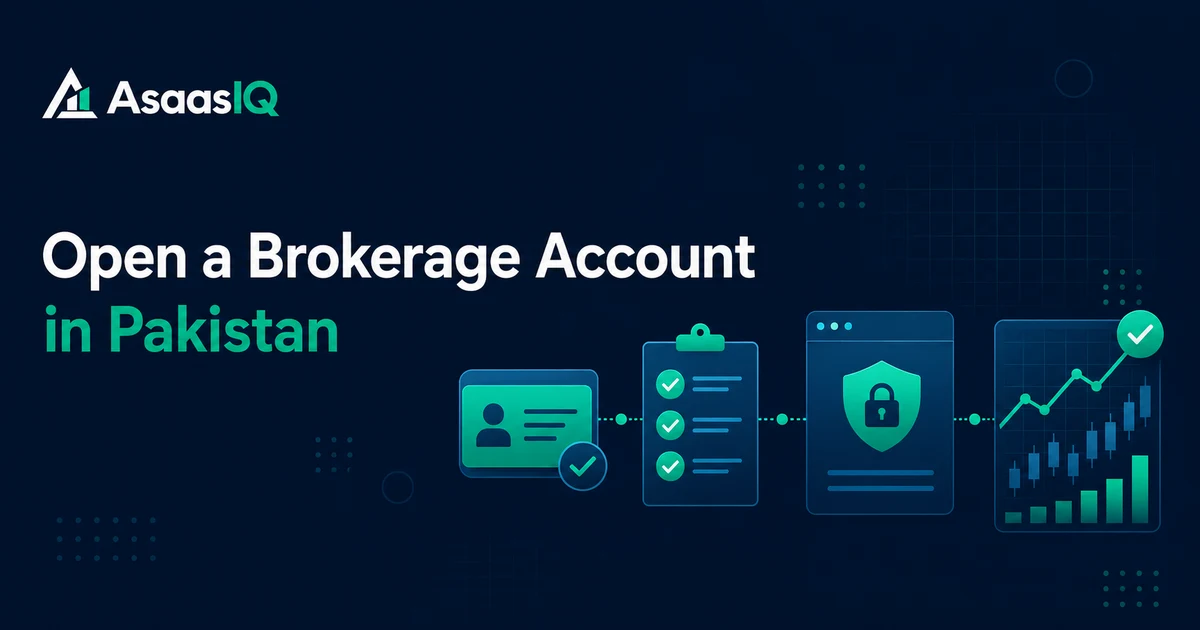
- A CDC sub-account or investor account, set up through your chosen broker
- A linked bank account for moving money in and out
- Your CNIC and whatever other documents the broker requires for account verification (this is standard KYC — know-your-customer — compliance, not unique to any one broker)
Exactly how long this takes and what's required can shift over time as brokers update their processes, so if you're actually ready to open an account, it's worth checking directly with a PSX-registered broker rather than assuming last year's process still applies.
Who's actually watching over all this?
This is a fair question, and a lot of new investors assume — incorrectly — that the State Bank of Pakistan regulates stock trading. It doesn't, not directly. The SBP's job is monetary policy and banking oversight: interest rates, currency stability, the banking sector. It affects markets indirectly (interest rate decisions ripple into stock valuations all the time) but it isn't the referee for the PSX itself.
That role belongs to the Securities and Exchange Commission of Pakistan, the SECP. The SECP oversees capital markets broadly — that includes the PSX, brokerages, asset management companies, and corporate governance rules for listed companies. The PSX also self-regulates to some degree as an exchange, but the SECP sits above it as the primary watchdog.
The index question
You'll frequently hear about "the market being up" or "the market being down" in a single sentence, which is a bit of a simplification — hundreds of companies trade on the PSX, and they don't all move together. What people usually mean is that a benchmark index moved. The PSX publishes several of these indices, tracking baskets of companies chosen and weighted according to specific criteria.
Index composition isn't fixed forever. Companies get added, removed, or reweighted periodically based on rules the PSX maintains. Rather than repeating specific index values or historical performance figures here — numbers that would be stale the moment this is published — it's more useful to point you toward the PSX's own site, where current index data is always accurate by definition.
Why this feels harder than it should
A few honest reasons the PSX intimidates newcomers:
The vocabulary is genuinely unfamiliar. Circuit breakers, freefloat, T+2 settlement — none of these terms exist in everyday conversation, so of course they sound intimidating on first exposure. They're learnable, but nobody's born knowing them.
Volatility is real, not imagined. Like most emerging markets, the PSX can move sharply in short windows, sometimes for reasons connected to company fundamentals and sometimes for reasons connected to broader sentiment, currency movements, or political news. This isn't a flaw unique to Pakistan's market — it's a feature of markets that are smaller and less liquid than, say, the New York Stock Exchange.
The onboarding friction is real too. Opening a brokerage account, understanding order types, figuring out where to even start — none of it is instant. That's fine. Give yourself permission to spend a few weeks just reading and understanding before you commit money.
A word on risk, stated plainly
Buying individual stocks means accepting the possibility of losing some or all of what you put in. Prices respond to company performance, yes, but also to macroeconomic shifts, currency fluctuations, political developments, and plain old market mood swings that have nothing to do with fundamentals. Nothing about a stock's past price movement — no matter how impressive — guarantees anything about where it goes next.
Where you might go from here
Understanding the PSX is the foundation, not the whole building. A natural next step is figuring out whether you want direct exposure to individual companies or prefer the diversification that comes with pooled vehicles like mutual funds — a decision covered in more depth in Stocks vs Mutual Funds in Pakistan, and one that depends heavily on how much time you're willing to spend researching individual businesses versus trusting a fund manager to do it for you.
A note on what this article doesn't cover
This is deliberately an orientation piece, not a complete manual. It doesn't walk through choosing a specific brokerage, doesn't get into the tax treatment of capital gains or dividends (those rules change and deserve their own careful treatment), and doesn't discuss any specific listed company. Account-opening steps, tax rules, and market structure details can all shift over time — always confirm current specifics with the PSX, SECP, or a licensed brokerage before you act on anything.
Sources & References
Educational information only
AsaasIQ provides general educational content about investing in Pakistan. Nothing on this site is personalized financial, tax, legal or investment advice. AsaasIQ is not a financial advisor, broker, asset management company or affiliate of the Pakistan Stock Exchange. Always verify current facts, rates and regulations with official sources before acting.

Founder and Editor, AsaasIQ
Software engineer and the founder of AsaasIQ. Not a licensed financial adviser -- every article is educational and source-linked.
Published August 2026 · Last reviewed August 2026